Many organizations use public cloud service providers, some in addition to their private cloud and on premise deployments. The right product mix not only reduces vendor lock-in and shadow IT, but is also an enabler for the constituents that includes IT administrators, network and security operations, as well as DevOps.

Maintaining application security and configurations across multiple environments is complex AND error prone and increases the attack surface. Careful testing is required to protect business-critical applications from hacking attempts, which may include denial of service, network and application attacks, malware and bots and impersonation.
A successful implementation will not only include the right cloud provider, the correct security, licensing and cost model, but also the appropriate automation tools to help secure the technology and security landscape consistently as applications are rolled out in a continuous integration and continuous delivery (CI/CD) process.
When Does Automation Become a Pressing Issue?
The reasons to automate may be due to resource constraints, configuration management, compliance or monitoring. For example, an organization may have very few people managing a large set of configurations, or the required skill set spans networking AND security products, or perhaps the network operation team does not have the operational knowledge of all the devices they are managing.
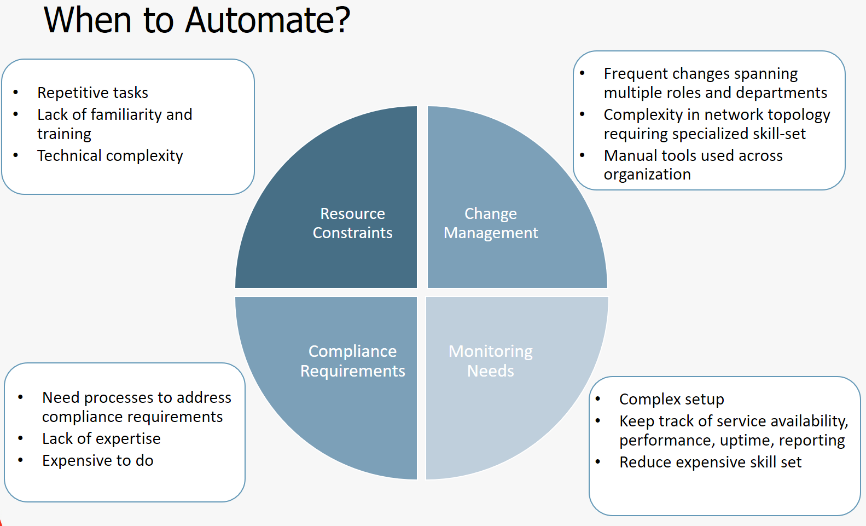
Below are a few benefits that automation provides:
- Time savings and fewer errors for repetitive tasks
- Cost reduction for complex tasks that require specialized skills
- Ability to react quickly to events, for example,
- Automatically commission new services at 80% utilization and
decommission at 20%
- Automatically adjust security policies to optimally address
peace-time and attack traffic
[You may also like: How to Move Security Up the DevOps Priority List]
Automate the Complexity Away?
Let us consider a scenario where a development engineer has an application ready and needs to test application scalability, business continuity and security using a load balancer, prior to rolling out through the IT.
The developer may not have the time to wait for a long provisioning timeline, or the expertise and familiarity with the networking and security configurations. The traditional way would be to open a ticket, have an administrator reach out, understand the use case and then create a custom load balancer for the developer to test. This is certainly expensive to do, and it hinders CI/CD processes.
[You may also like: Economics of Load Balancing When Transitioning to the Cloud]
The objective here would be enable self-service, in a way that the developer can relate to and work with to test against the load balancer without networking and security intricacies coming in the way. A common way is by creating a workflow that automates tasks using templates, and if the workflow spans multiple systems, then hides the complexity from the developer by orchestrating them.
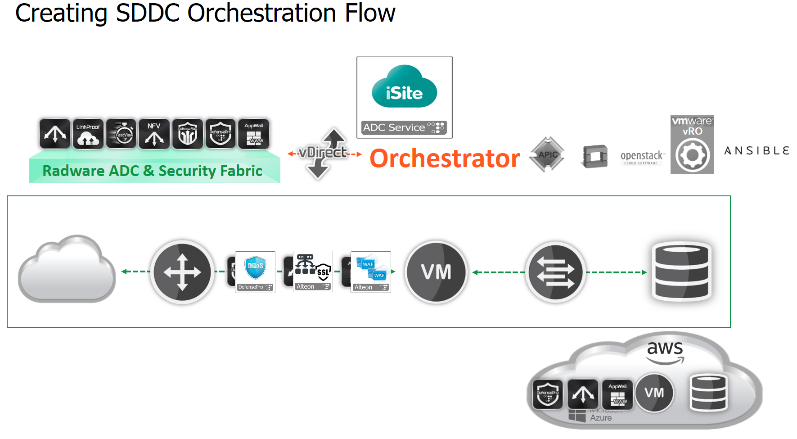
The successful end-to-end automation consists of several incremental steps that build upon each other. For example, identify all use cases that administrators take that are prone to introducing errors in configuration. Then make them scripted – say, using CLI or python scripts. Now you’re at a point where you’re ready to automate.
You’ll have to pick automation and orchestration tools that’ll help you simplify the tasks, remove the complexity and make it consumable to your audience. Most vendors provide integrations for commonly used automation and orchestration systems - Ansible, Chef, Puppet, Cisco ACI and Vmware vRealize – just to name a few.
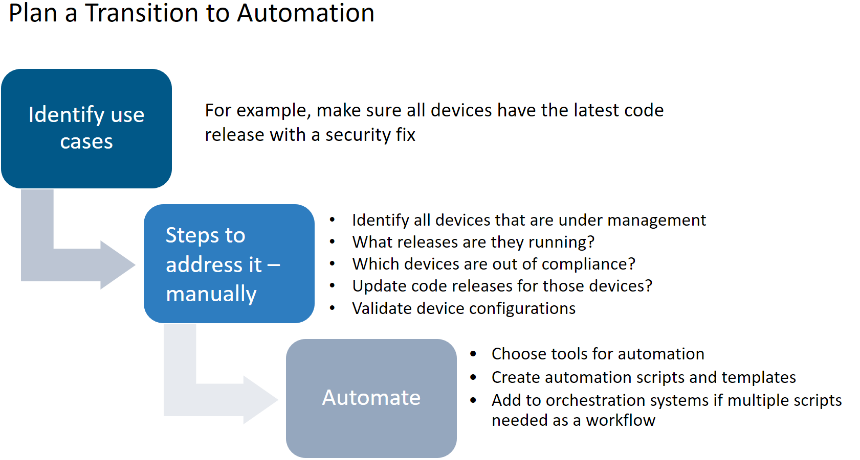
Before you embark on the automation journey, identify the drivers, tie it to business needs and spend some time planning the transition by identifying the use cases and tools in use. Script the processes manually and test before automating using tools of your choice.